Biology
Stimulus, Response & Homeostasis
 2:29Video
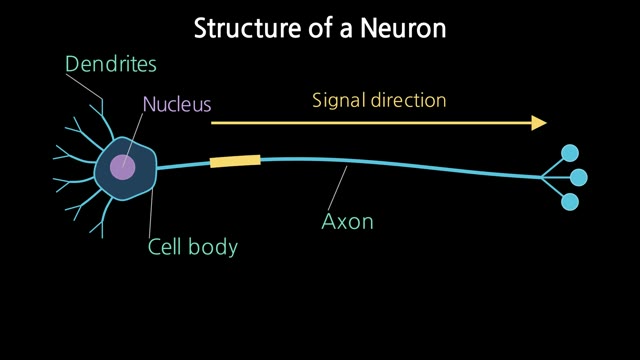
From Stimulus to Response: How Neurons Carry Signals
Follows the parts of a neuron (dendrites, cell body, axon), the direction of the signal, and the sensory neuron → interneuron → motor neuron pathway, then races signals at the same speed to compare a conscious response with unconditioned reflexes (withdrawal and knee-jerk). No narration; explained through subtitles.
Made with Manim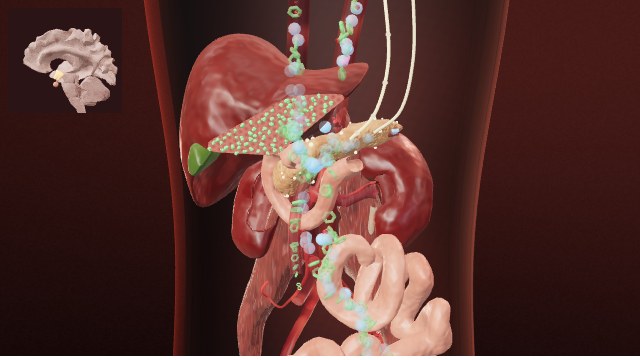 SimulationPopular
Blood Sugar Control Room
Glucose, insulin and glucagon particles flow through a blood vessel that links model organs: liver, pancreas, small intestine, muscle, hypothalamus and kidney. Eat, fast or run and let time flow to see how pancreatic hormones and autonomic nerves change glycogen storage and breakdown in the liver to keep blood glucose steady by negative feedback, then find out why diabetes develops in a body that makes almost no insulin or where insulin works poorly. Press ‘See where organs really are’ and the organs in the diagram move to their places in the body, turning into public anatomy models (HuBMAP HRA, BodyParts3D).
Made with three.js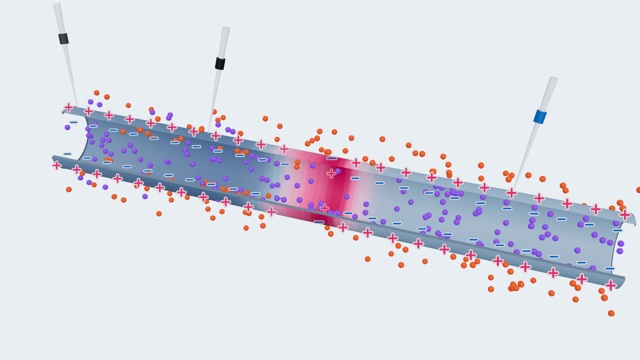 Simulation
Action Potential Lab
Stimulate a 3D axon to find the threshold and the all-or-none law, then scrub through a membrane close-up as Na⁺ and K⁺ channels open and close and the membrane potential graph is drawn. Add myelin to time saltatory conduction, and see how a reuptake inhibitor and a receptor blocker change the signal in the next neuron at a synapse.
Made with three.js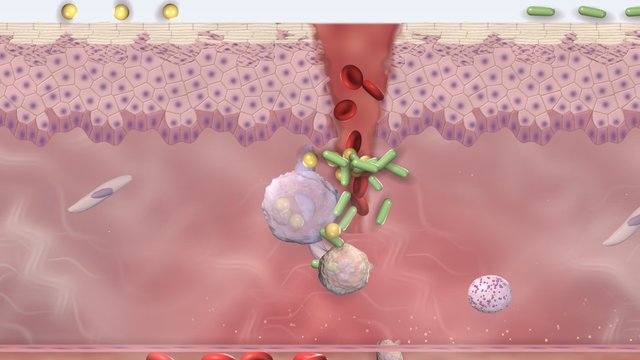 GameNewNov 19
Immune Defense: innate immunity, adaptive immunity and vaccines
A Godot game in which you steer a macrophage to engulf bacteria in a wound (phagocytosis, inflammation), find the helper T cell and B cell whose receptors fit the antigen so antibodies are made, then compare how fast and how much antibodies rise when the same pathogen enters a vaccinated and an unvaccinated body.
Made with Godot